
Home
For contractors
About us
Contact
Request a quote
Roof lanterns
Inspiration
Google-rating: 5.0★★★★★from 2 reviews
Building a DIY roof lantern is possible, and with timber and polycarbonate a handy person can manage.
A free, no-obligation quote tailored to you in just a few clicks. You finish on the quote page, where everything is already filled in.
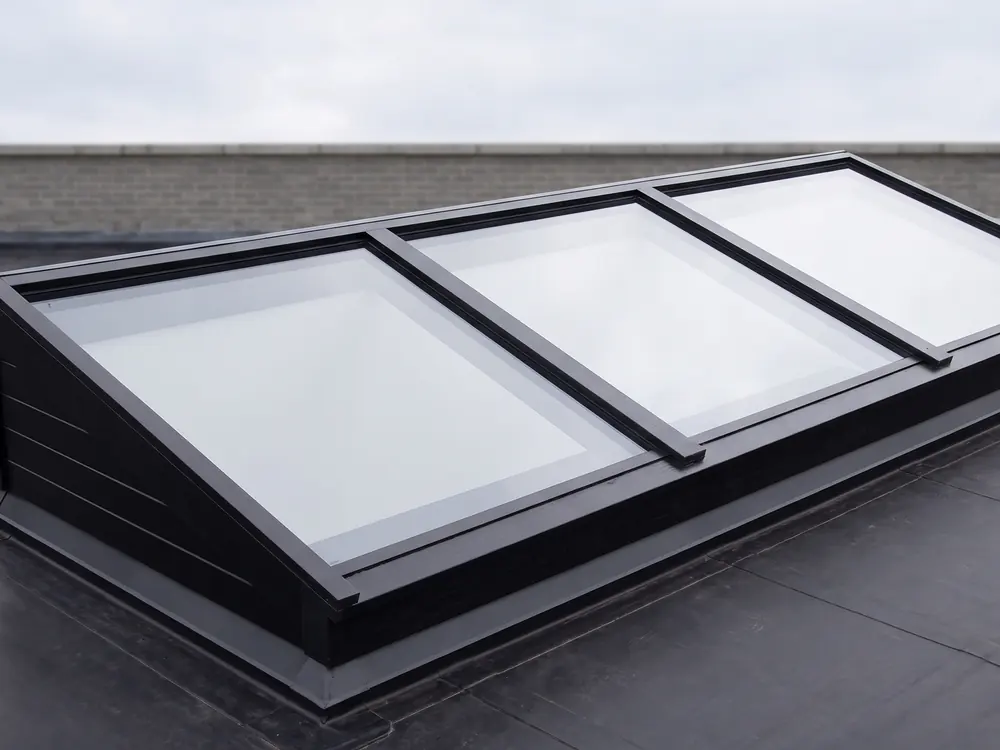
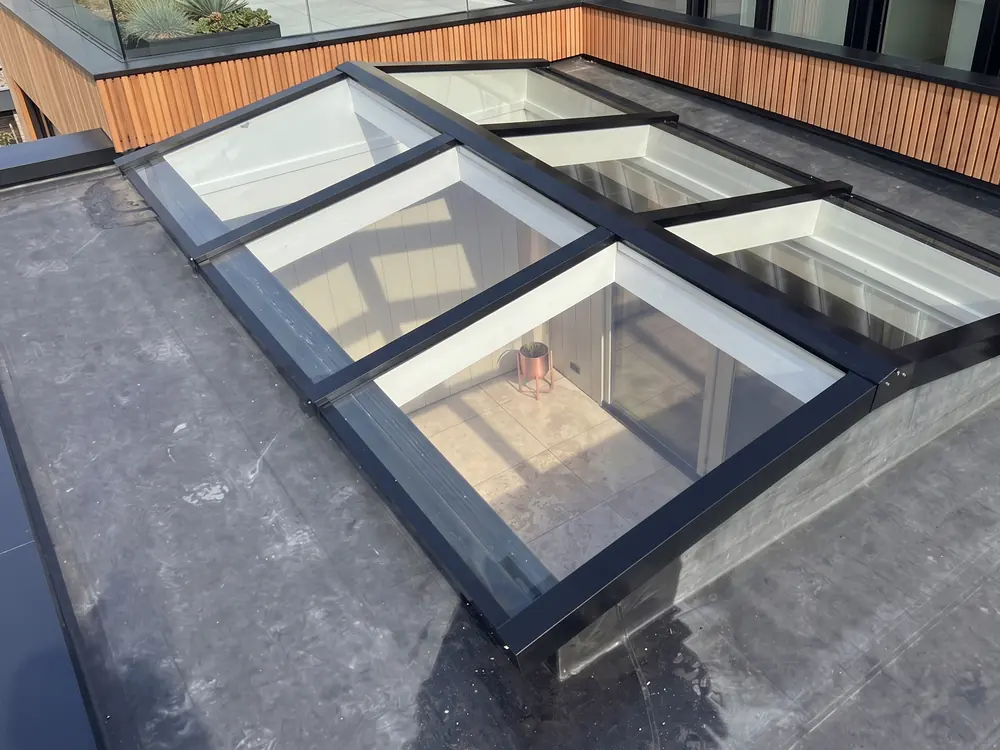 Lean-toGable
Building a DIY roof lantern is possible, and with timber and polycarbonate a handy person can manage. With glass, the weight, the watertight connection, the thermal break and safety become difficult. For a living space, a made-to-measure roof lantern is usually the more reliable choice, which you or your builder can then fit yourself.
A roof lantern is more than glass on a frame. It is part of the roof that has to cope with rain, snow, wind and temperature changes for years. If you build it yourself, you need to get four things right: watertightness, insulation of the frame, the weight of the glass and the safety of whoever sits underneath.
For a shed, carport or summerhouse the bar is lower. There you often choose polycarbonate, which is light and easy to work with. The difference with glass is explained in glass or polycarbonate.
Watertightness. Water does not only run over the glass but also along edges, bars and the connection to the roof. That is why a roof lantern has drainage profiles and an upstand that rises above the roof covering. Without those details a leak soon develops, one you only notice when the ceiling is already damp.
Thermal break. An aluminium profile without a break conducts cold inside. The result is condensation and sometimes mould on the frame. Factory profiles have an insulating strip between the inner and outer part. That is not something you can copy at home.
Double glazing weighs roughly 20 to 30 kilos per square metre, triple glazing more. A roof lantern of a few square metres is therefore heavy, and the frame has to carry that weight plus snow and wind without sagging. That calls for a structure that is sized for it.
Glass above your head must stay in place if it breaks. That requires laminated safety glass to the NEN standard. Why that matters so much is explained in safety glass and laminated glass. Ordinary single glass from a DIY store is not suitable for this.
There is a middle way. DagLichtDesign makes the roof lantern to measure in its own factory in Barneveld, and you or your builder fit it. You receive a printed and digital installation manual with the connection details and a step-by-step plan. For questions there is phone support on weekdays from 7:00 to 17:00.
Need a common size? Look at a mono-pitch roof lantern. The 1, 2 and 3 metre sizes are always in stock.
Sometimes on materials, especially with polycarbonate. With glass, a proper profile and sealing the difference quickly shrinks, and a mistake in the connection costs far more later. Request a quote to make a fair comparison.
Yes, if you are handy and have the right equipment. The installation manual covers the upstand, insulation, sealing and safe lifting. For work on the roof covering, many people still bring in a builder or roofer.
Above a habitable room you need laminated safety glass that holds together if it breaks. Insulating glass such as HR++ limits heat loss and condensation. Always have the glass made to measure by a glass supplier and allow for the weight.
Send a photo or sketch with dimensions. Within 24 hours you receive a quote with glazing options, lead time and price.
Request a quote Get in touchA few questions, a photo or the dimensions, and we will prepare a tailored quote. Prefer to call: +31 342 223 190.
Request a quote More information