
Home
For contractors
About us
Contact
Request a quote
Roof lanterns
Inspiration
Google-rating: 5.0★★★★★from 2 reviews
Per square metre of glass, a roof lantern gives roughly two to three times as much daylight as a window of the same size in a wall.
A free, no-obligation quote tailored to you in just a few clicks. You finish on the quote page, where everything is already filled in.
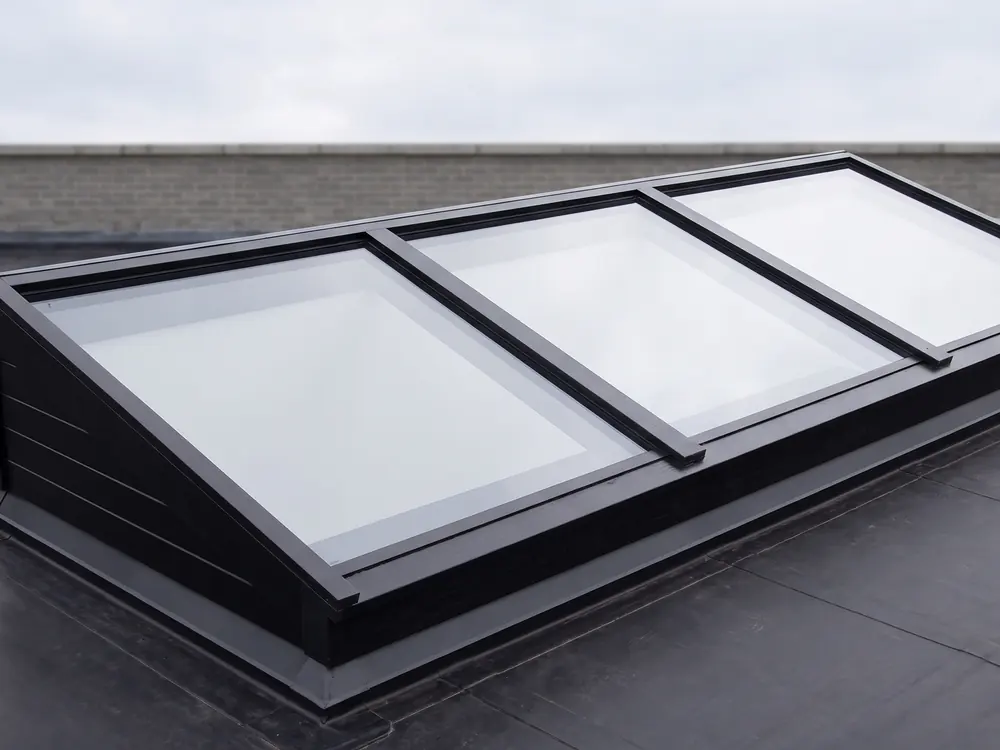
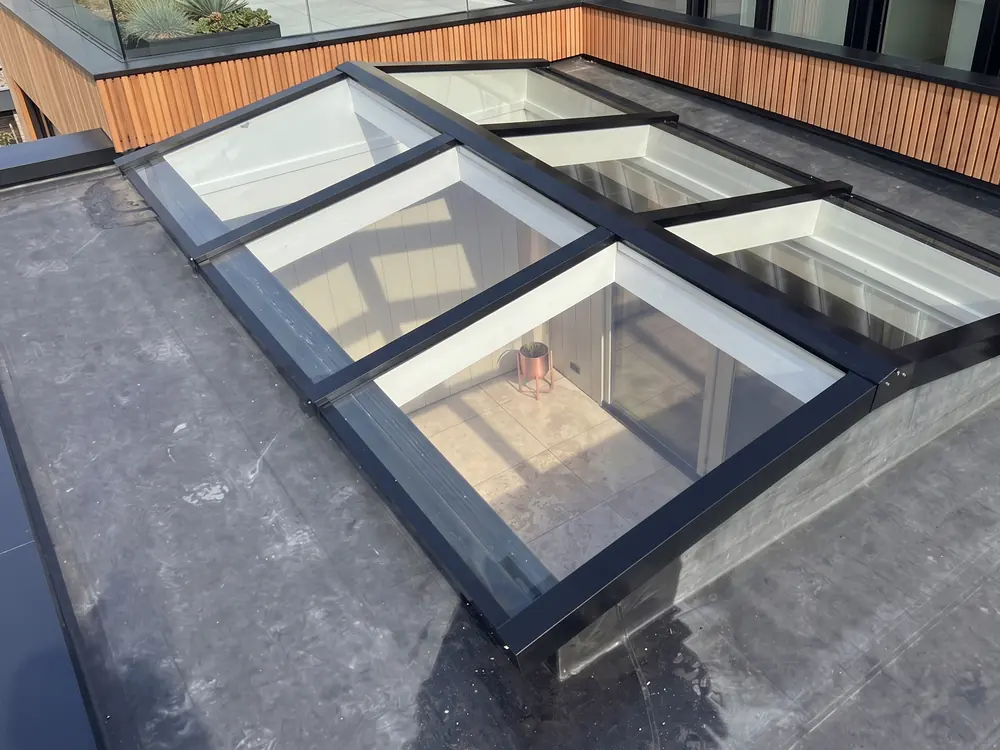 Lean-toGable
Per square metre of glass, a roof lantern gives roughly two to three times as much daylight as a window of the same size in a wall. That is because glass in the roof sees the whole sky, while a wall window sees only half of it and is often partly shaded. How much light actually comes in also depends on the size, the glass and the depth of the upstand.
How much light does a roof lantern give? More than most people expect. A window in a wall looks at the horizon and catches light from one side. Neighbours, trees and an overhang block part of that. Glass in the roof looks up at the brightest part of the sky, even on a cloudy day. As a result, far more light enters per square metre.
Light from above also reaches deeper into the room and spreads more evenly. A wall window mainly lights the first few metres behind the glass. A roof lantern in the middle of an extension lights exactly the part of the room furthest from the wall. That is often where the old rear wall stood and where light was always poorest.
Not all light passes through the glass. Clear sealed glazing lets through a large share of visible light; HR++ double glazing typically transmits around 70 to 80 percent, triple glazing a little less because of the extra pane. A solar control coating blocks heat, but also some of the light. Frosted glass diffuses the light and prevents harsh shadows, although you no longer see the sky.
A rule of thumb from practice: a glass area of about ten to twenty percent of the floor below makes a room noticeably brighter. More glass is not always better. A lot of glass facing south can get too warm in summer; see overheating under a roof lantern.
Yes, especially the upstand. Light comes in at an angle, and a tall, narrow upstand acts like a shaft: the deeper it is, the more light is caught on the side walls. A light finish on the inside reflects the light further into the room. The pitch has less effect on the amount of light than people often think. For good drainage DagLichtDesign advises at least 7°, and that costs hardly any light.
A mono-pitch roof lantern can be up to 5 metres wide in one panel without a glazing bar. One large pane with little framing gives the most light per square metre. A hipped roof lantern catches light from all four directions, useful in a large open space. Not sure it will be enough? Read how to brighten a dark living room.
Per square metre of glass there is little between them, as both face the sky. The difference is in size. A roof lantern usually has a larger glass area and less frame per square metre, so it lets in more light overall.
Triple glazing has an extra pane and therefore lets through slightly less light than HR++ double glazing. In practice you will hardly notice. The difference in insulation is much bigger than the difference in light.
Facing south, direct sunlight can be bright. Solar control glass, frosted glass or a screen soften it. Facing north, the light is soft and even without any extra measures.
Send a photo or sketch with dimensions. Within 24 hours you receive a quote with glazing options, lead time and price.
Request a quote Get in touchA few questions, a photo or the dimensions, and we will prepare a tailored quote. Prefer to call: +31 342 223 190.
Request a quote More information