
Home
For contractors
About us
Contact
Request a quote
Roof lanterns
Inspiration
Google-rating: 5.0★★★★★from 2 reviews
A roof lantern with HR++ double glazing does not feel cold in winter, as long as the upstand is well insulated and the room is heated normally.
A free, no-obligation quote tailored to you in just a few clicks. You finish on the quote page, where everything is already filled in.
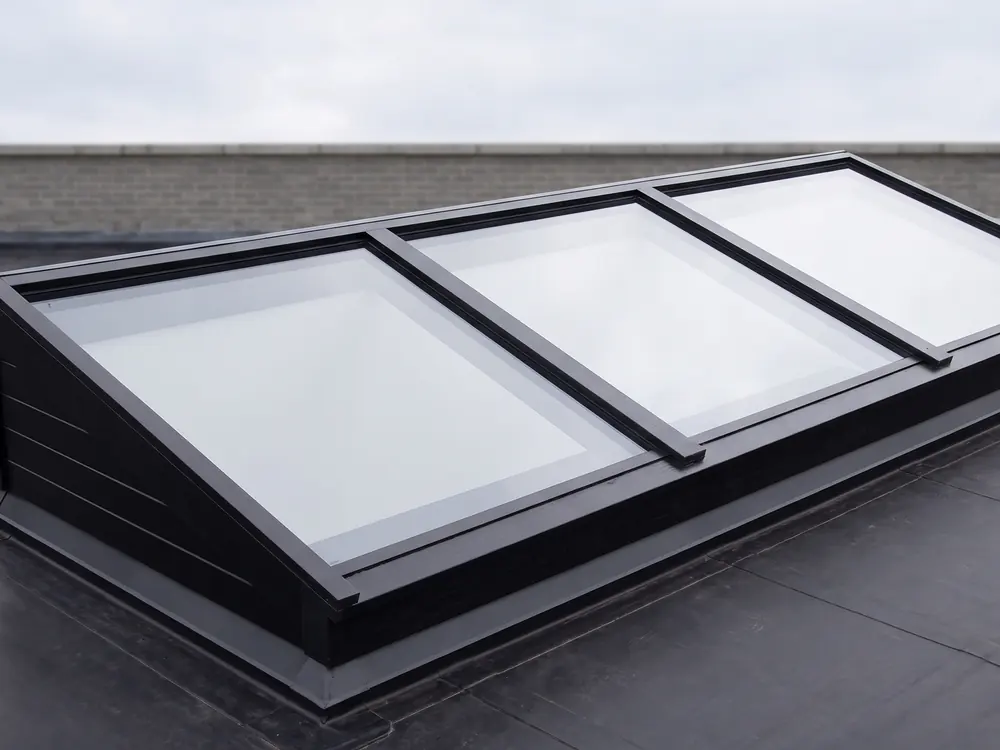
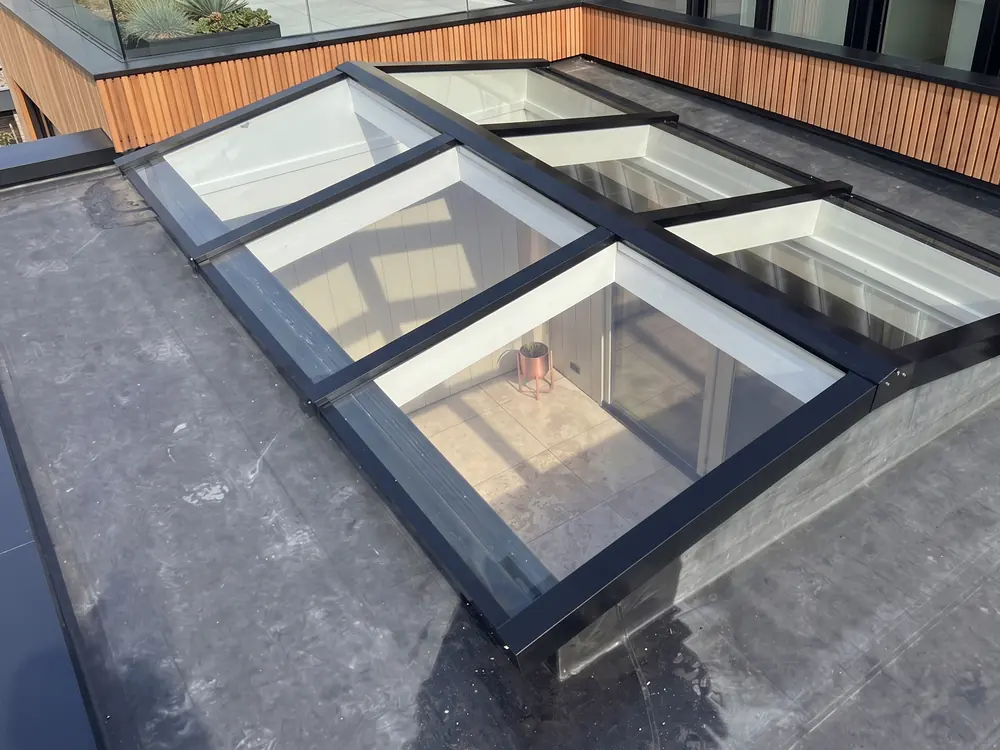 Lean-toGable
A roof lantern with HR++ double glazing does not feel cold in winter, as long as the upstand is well insulated and the room is heated normally. Glass does stay colder than an insulated roof, so with a lot of moisture in the house you may see condensation. Triple glazing and good ventilation reduce that difference.
A roof lantern in winter is warmer than many people think. With frost outside and a warm room, the inner pane of HR++ double glazing stays well above freezing; with triple glazing it is a few degrees warmer still. What you may feel is a cold downdraught: air that cools along a colder surface and sinks. You notice it mainly under large areas of glass and with old double glazing.
HR++ has a U-value of about 1.1 W/m²K, triple glazing about 0.5 W/m²K. The lower the figure, the less heat escapes through the glass and the warmer the inside feels. What that means for your heating bill is explained under heat loss through a roof lantern.
Warm indoor air holds moisture. When that air touches a surface colder than the dew point, the moisture condenses. In winter the glass is the coldest surface in the room, so that is where you see it first. Cooking, showering and drying laundry raise humidity. Ventilating through a window or vent in the wall helps; read more about condensation on a roof lantern and triple glazing or HR++.
With a thermally broken frame you see far less condensation on the aluminium edge, because an insulating strip separates the inside and outside of the profile. All DagLichtDesign frames are thermally broken.
On a decent pitch, snow often slides off the glass by itself, especially when warmth from inside melts the bottom layer. On a shallow pitch it stays longer. For a properly dimensioned roof lantern that is not a problem, but it costs light for a while. How the glass and frame cope with the load is covered under snow load and wind load.
Never walk on the glass and do not use a shovel. Do not pour hot water on ice either: the sudden temperature change puts stress on the glass. Let it thaw by itself and make sure the drainage is clear so meltwater can run off.
The winter sun is low and the days are short. A wall window catches little, especially with neighbours and trees nearby. A roof lantern brings in light from above and makes grey days noticeably brighter. Facing north or west, triple glazing can improve comfort further.
No, separate heating for the roof lantern is not needed. Normal heating of the room and a well insulated upstand are enough. Do make sure warm air can reach the area under the lantern.
The glass itself does not freeze. Water in a blocked outlet or gutter can freeze, though, and then meltwater has nowhere to go. Clean the drainage before winter starts.
Not always. HR++ double glazing is more than enough for most living rooms and open kitchens, especially facing south. Triple glazing mainly pays off above bedrooms and facing north or west. The trade-offs are set out in triple glazing or HR++.
Send a photo or sketch with dimensions. Within 24 hours you receive a quote with glazing options, lead time and price.
Request a quote Get in touchA few questions, a photo or the dimensions, and we will prepare a tailored quote. Prefer to call: +31 342 223 190.
Request a quote More information