
Home
For contractors
About us
Contact
Request a quote
Roof lanterns
Inspiration
Google-rating: 5.0★★★★★from 2 reviews
A fully glazed roof on an extension gives the most light, but also the most heat in summer and the most heat loss in winter.
A free, no-obligation quote tailored to you in just a few clicks. You finish on the quote page, where everything is already filled in.
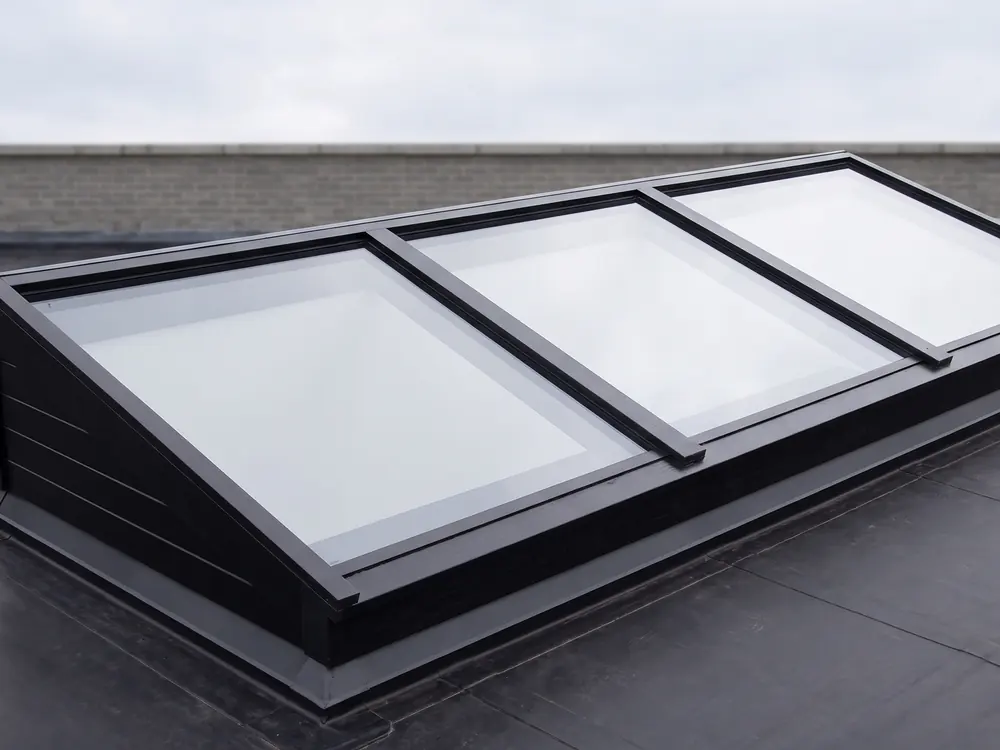
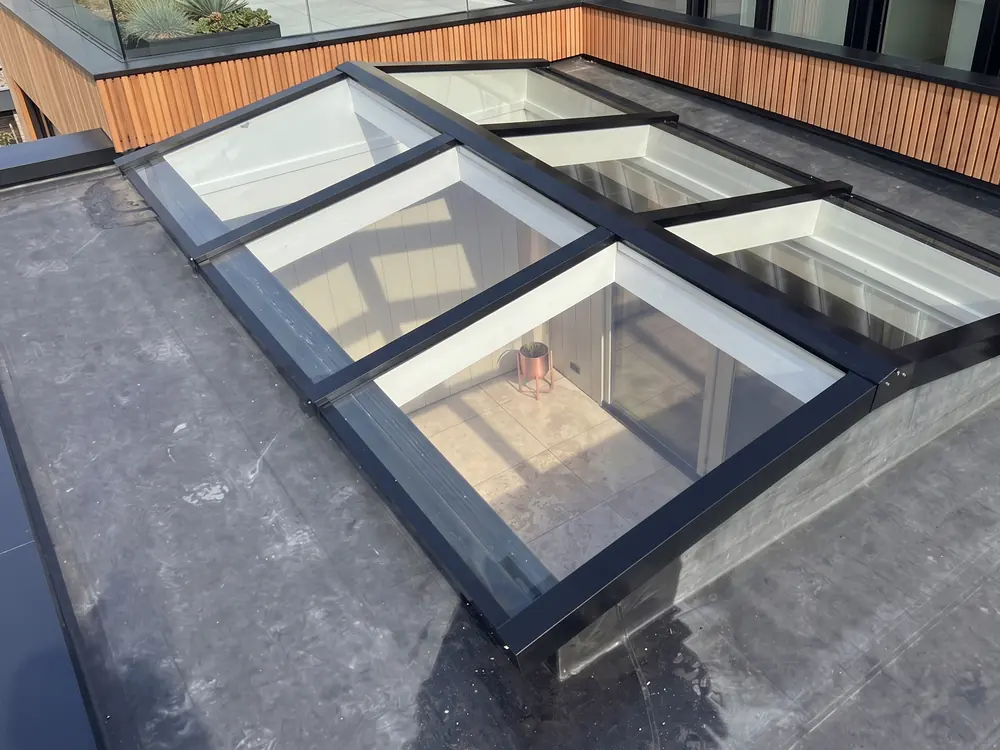 Lean-toGable
A fully glazed roof on an extension gives the most light, but also the most heat in summer and the most heat loss in winter. A roof lantern in an insulated roof gives plenty of daylight and keeps the room better balanced. For a living space you use all year round, a roof lantern on the extension is usually the wiser choice.
With a glass roof on an extension, the entire roof surface is glazed. You are almost outdoors: lots of sky, lots of light and a view of the clouds. That works well in a garden room or conservatory that you mainly use in spring and autumn.
The downside is physics. Even good insulating glass lets through more heat than a well-insulated solid roof. In winter you lose more heat, and in summer a lot of solar heat comes in. Especially facing south, the temperature under a large glass roof can climb quickly. What helps is explained in overheating under a roof lantern.
A roof lantern is a glazed strip in an otherwise solid, insulated roof. You get daylight exactly where you need it, usually over the deepest part of the room, and the roof around it keeps heat in or out.
You decide how much glass you want. A narrow lean-to along the wall, a gable in the middle or a large hipped roof lantern that fills a good part of the roof: it is all made to measure. That way you set your own balance between lots of light and a calm indoor climate.
How will you use the room? If it is a living room or kitchen in daily use, you want a stable temperature, and a roof lantern suits that better. If it is a garden room that can move with the seasons, more glass is fine.
Where is the sun? Facing north, lots of glass is less of an issue; facing south it is. If you still want plenty of glass there, consider solar control glass or separate shading. For heat loss, the glazing choice matters: see the difference between triple glazing and HR++ double glazing.
A large glass roof is usually more expensive per square metre than a solid roof, because glass, frame and sealing take more material and labour. A roof lantern combines the two. What an extension with a roof lantern roughly costs is covered in the cost of an extension with a roof lantern. Always request a quote for your own situation.
It can, especially with a south-facing glass roof and no shading. Solar control glass limits the heat, and external shading stops the sun before it reaches the glass. A roof lantern has less glass area and therefore less trouble with heat.
That depends on the extension itself, not the glass. Many rear extensions are permit-free under certain conditions, but always check with your local council. The roof lantern itself usually does not need a separate permit.
Usually yes, provided the structure allows it. A builder or structural engineer assesses whether an opening can be made and how it is supported. Read more in a roof lantern in an existing flat roof.
Send a photo or sketch with dimensions. Within 24 hours you receive a quote with glazing options, lead time and price.
Request a quote Get in touchA few questions, a photo or the dimensions, and we will prepare a tailored quote. Prefer to call: +31 342 223 190.
Request a quote More information